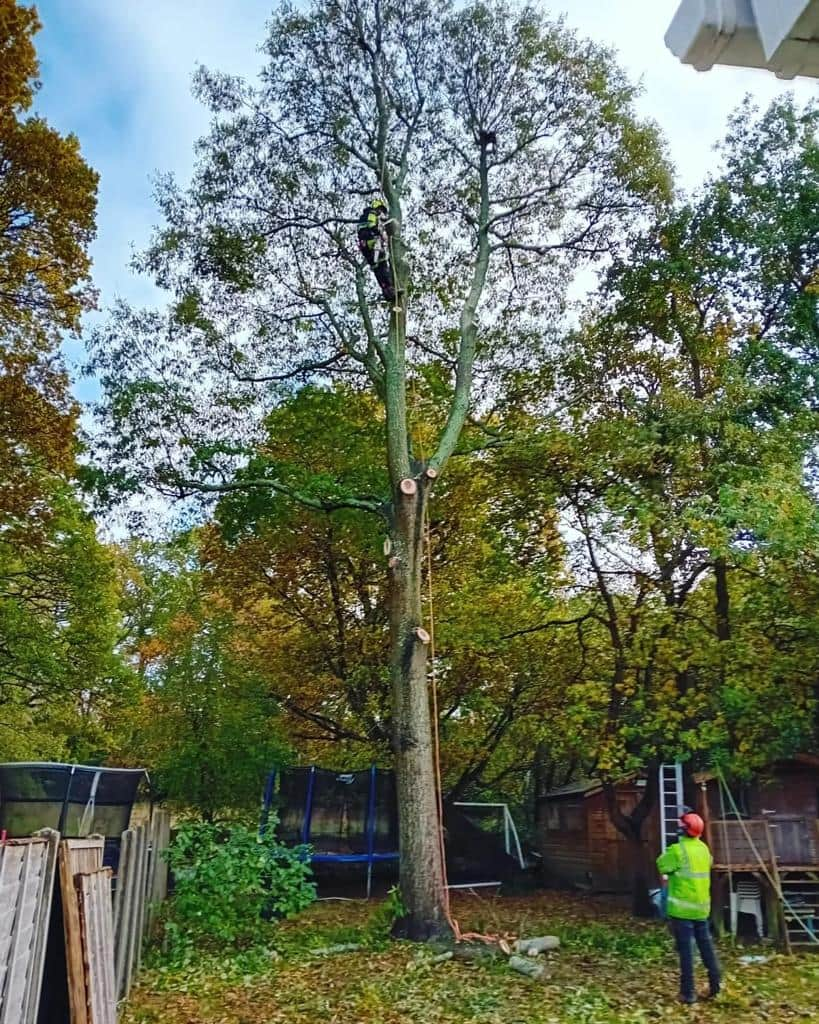
Dead branches are a natural part of a tree’s development, but they should not always be left in place. Within a garden, deadwood can become a concern when it hangs above paths, driveways, buildings or areas that people regularly use. It may also indicate that part of the tree has been affected by damage, disease or declining health.
The appropriate response depends on the size, position and condition of the branch. A professional tree surgeon can distinguish between minor deadwood that presents little immediate concern and weakened limbs that should be removed promptly.
How to Decide When Dead Branches Need Removing
A branch does not necessarily become dangerous as soon as it dies. However, dead wood gradually loses strength as it dries and deteriorates. The likelihood of it breaking can increase over time, particularly during windy weather or when decay is present.
Look for the Signs of a Dead Branch
The absence of leaves can indicate deadwood during the growing season, although this alone is not always conclusive. Some branches leaf later than others, while stress can temporarily reduce growth.
More reliable warning signs include:
- Brittle twigs that snap easily
- Missing buds during the growing season
- Peeling or loose bark
- Dry, discoloured wood beneath the bark
- Fungal growth around a branch or union
- Cracks where the branch joins the trunk
- A limb that remains bare while surrounding branches grow normally
- Smaller dead twigs falling from the same section
A tree surgeon can confirm whether the branch is dead, declining or simply dormant.
Act Promptly When Deadwood Is Above a Frequently Used Area
Position is one of the most important factors when assessing dead branches. A small limb over an unused part of a garden may present a different level of concern from a heavy branch above a path, seating area, parking space or entrance.
Branches over frequently used areas should be inspected without unnecessary delay. Even if a limb appears stable from the ground, decay or cracking may be present where it connects to the tree.
Arrange an Assessment After Stormy Weather
Strong winds can place considerable strain on branches that are already dead or weakened. A limb may remain in the canopy after a storm but develop cracks, split at a fork or become partially detached.
Following severe weather, inspect the tree from a safe position on the ground. Warning signs include hanging branches, freshly exposed wood, a changed branch angle or debris beneath the canopy. Do not stand below a damaged tree or attempt to pull down suspended material.
Do Not Ignore Hanging or Partially Broken Branches
A branch that has broken but remains caught in the canopy can be difficult to predict. It may move as the surrounding branches sway and can fall without much warning.
Suspended branches require controlled removal using suitable equipment and techniques. Trying to dislodge them from below can cause the branch to fall unexpectedly or bring down additional material.
Deadwood Near the Main Trunk Needs Careful Inspection
When several branches die within the same area, the issue may extend beyond individual limbs. Decay, root problems, physical damage or disease can affect the tree’s ability to support healthy growth.
Large dead branches connected to the main trunk should be assessed carefully. Their removal may be necessary, but the tree surgeon should also investigate why the dieback has occurred and whether other parts of the tree are affected.
Smaller Dead Branches Can Still Create Problems
Fine deadwood may appear relatively harmless, but repeated shedding can make lawns, paths and planted areas difficult to maintain. It can also indicate that the crown has become congested or that certain parts of the tree are receiving insufficient light.
Selective pruning can remove dead twigs while retaining healthy growth. This creates a cleaner canopy and provides a clearer view of any developing structural defects.
Correct Cuts Protect the Remaining Tree
Dead branches should be removed at an appropriate point without cutting unnecessarily into the trunk or healthy supporting wood. Poorly positioned cuts can create larger wounds, damage the branch collar and make it harder for the tree to respond effectively.
A professional tree surgeon will also consider the weight of the limb and the way it should be dismantled. Large branches are often removed in controlled sections to prevent bark tearing or damage to the surrounding garden.
Dead Branches May Reveal a Wider Tree Health Issue
Removing deadwood improves the condition of the canopy, but it does not automatically resolve the reason the branch died. Where dieback is widespread or recurring, the tree may need a broader assessment.
Possible warning signs include:
- Dead branches appearing throughout the crown
- Leaves becoming unusually sparse
- Fungal growth around the trunk or roots
- Cracks or cavities in major limbs
- Changes in the tree’s position
- Further branches dying after earlier pruning
Identifying the underlying cause helps determine whether deadwood removal is sufficient or whether other tree surgery is appropriate.
Regular Inspections Help Prevent Deadwood Building Up
Mature garden trees benefit from periodic observation, particularly when their branches extend over areas used by people or vehicles. Deadwood can develop gradually and may be difficult to identify from ground level once it becomes mixed into a dense canopy.
Professional inspections allow developing problems to be noticed before branches become extensively weakened. They also help ensure that pruning is limited to what the tree genuinely needs.
Conclusion
Dead branches should be assessed promptly when they are large, damaged, suspended or positioned above frequently used parts of a garden. Removal may also be advisable when deadwood is widespread or accompanied by other signs of declining tree health.
EM Tree Surgery South Cerney provides professional tree inspections and deadwood removal in South Cerney, Gloucestershire. If you have noticed bare, brittle or damaged branches, contact us to arrange an assessment and determine the most appropriate action.