Mature trees can add character, shade and structure to a garden, but their size and position need to remain manageable. When branches spread towards roofs, walls, gutters, paths or outbuildings, the tree may begin to interfere with the surrounding property.
An overgrown tree is not automatically dangerous. However, excessive growth can conceal damaged branches, reduce clearance and place greater leverage on weak unions. A professional assessment can establish whether pruning, crown reduction or another form of tree surgery is appropriate.
How Can an Overgrown Tree Affect Your Property?
The potential impact depends on the tree’s species, condition, size and distance from nearby structures. The following issues are particularly worth monitoring.
Branches Can Scrape Against Roofs and Walls
Branches moving in the wind can rub against tiles, fascias, guttering and exterior finishes. Repeated contact may disturb roofing materials, mark surfaces or damage lightweight components.
Cutting branches back before they establish regular contact can restore clearance. The work should use well-positioned pruning cuts rather than removing large sections without considering the tree’s structure.
Falling Branches Can Cause Localised Damage
Dead, split or poorly attached branches may fail during strong winds. Heavily extended limbs can also place considerable force on their attachment points, especially when carrying dense foliage.
Warning signs can include:
- Hanging or broken branches
- Visible splits at branch unions
- Dead sections within the crown
- Cavities or decayed wood
- Branches becoming unusually low
- Previous branch failures beneath the tree
These features do not always mean that the whole tree must be removed, but they should be professionally assessed.
Leaves and Twigs Can Obstruct Gutters
Branches positioned above a roof can deposit leaves, twigs and seeds into gutters and outlets. Accumulated debris may restrict the flow of rainwater, causing it to overflow onto walls or collect around the building.
Tree surgery will not remove every falling leaf, but reducing unsuitable overhang and removing dead material can make the situation easier to manage.
Dense Growth Can Hold Moisture Near Buildings
A thick canopy close to a building may restrict air movement and sunlight around roofs, walls and garden structures. Damp surfaces can then take longer to dry following rainfall.
Selective pruning may improve separation and airflow while retaining the tree’s natural shape. Excessive thinning should be avoided because removing too much foliage can produce an unbalanced crown and vigorous regrowth.
Roots Can Affect Hard Surfaces
Tree roots grow where conditions allow, and their effects vary according to species, soil and location. Roots close to the surface may lift or distort paving, paths and lightweight garden structures.
Cracks or uneven ground near a tree should be investigated carefully. Cutting major roots without understanding their function could affect the tree’s stability and condition, so the relationship between the tree and the affected surface should be assessed professionally.
Branches May Obstruct Access and Visibility
Low or spreading branches can narrow driveways, block paths and reduce visibility around entrances. This may make everyday access awkward for vehicles and pedestrians.
Crown lifting or selective pruning can sometimes provide the required clearance. The amount removed should be proportionate to the tree’s age, species and structure.
Overgrowth Can Place Pressure on Fences and Outbuildings
Branches that grow through fencing or rest against sheds and other garden structures may cause movement during windy weather. As limbs increase in diameter, they can also place continuing pressure on nearby materials.
Early pruning is generally more straightforward than waiting until a substantial branch has become closely integrated with the structure.
Unbalanced Growth Can Increase Structural Strain
Trees often grow towards available light, sometimes producing a crown that is noticeably heavier on one side. Long branches create leverage at their attachment points, particularly where unions are already weak.
A carefully planned crown reduction may shorten selected branches and reduce excessive end weight. It should preserve the tree’s natural outline rather than leaving blunt stubs or removing the entire upper crown.
Warning Signs That Need Professional Attention
Arrange an assessment if you notice:
- Branches touching a roof, wall or overhead feature
- New cracks or splits in major limbs
- Deadwood above regularly used areas
- A sudden change in the tree’s lean
- Soil lifting or cracking around the base
- Roots disturbing nearby paving
- Branches blocking entrances or access routes
- An increasingly one-sided crown
- Fungal growth around the trunk or base
- Repeated branch loss after windy weather
Changes that appear suddenly deserve particular attention, even if the tree previously seemed healthy.
Which Tree Surgery Service May Be Suitable?
The correct work depends on the problem rather than the tree’s size alone. Possible options include:
- Pruning to remove damaged or conflicting branches
- Crown lifting to improve clearance beneath the canopy
- Crown reduction to manage excessive height or spread
- Deadwood removal to address dead branches
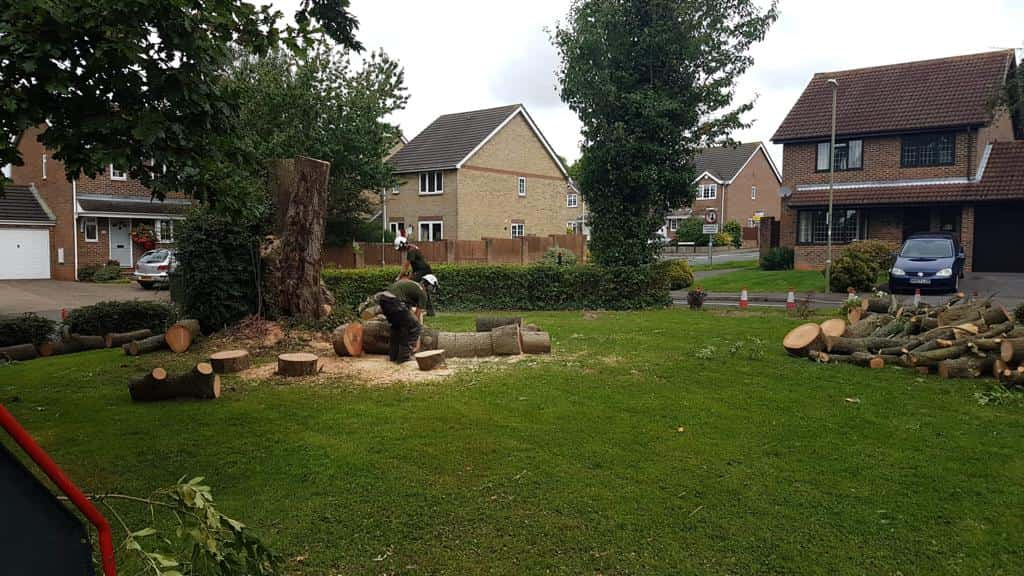
- Sectional dismantling where removal is necessary in a confined area
- Tree felling when retaining the tree is no longer appropriate
A professional tree surgeon should recommend the least extensive work capable of achieving the required outcome.
Why Early Assessment Matters
Dealing with overgrowth early usually provides more management options. Smaller, selective cuts can often improve clearance or balance before branches become excessively large.
Waiting until the tree is touching several structures or contains substantial damaged limbs may make the work more complex. Regular observation and timely tree surgery can help preserve healthy growth while reducing avoidable interference with the property.
Conclusion
Overgrown trees can affect roofs, gutters, walls, paths, fences and outbuildings when branches or roots are allowed to extend into unsuitable areas. The right response is not automatically heavy pruning or removal; it begins with understanding the tree’s condition and its relationship with the surrounding property.
If an overgrown tree is causing concern at your property in South Cerney, Gloucestershire, contact EM Tree Surgery South Cerney to arrange a professional assessment and receive clear guidance on the most appropriate work.
Call us on: 01285 708 216
Click here to find out more about EM Tree Surgery South Cerney
Click here to complete our contact form and see how we can help with your trees needs.